AI development
Hire AI Developers to Build Intelligent Products
Build AI applications, agents and automation with model expertise that survives production — retrieval, tools, evaluation — backed by software engineering, frontend, backend, QA and technical leadership.
30% off first month
Hire AI Developers to Build Intelligent Products. RAG, agents, and eval — not a robot illustration.
Retrieval → model → application
Why this page exists
What an AI hire is being asked to put into production
“Hire AI developer” ranges from LLM application work to automation and agents. Serious buyers want features in an existing product — not a demo notebook.
AI delivery in products is mostly systems work: model APIs, retrieval, tool calling, evaluation, data pipelines, and the application that users already log into. Copilot Studio and Microsoft-oriented automation appear when the organisation already lives in that estate. None of that replaces backend, frontend, or QA.
Apps Island’s AI developer is part of the 5-resource team, not a lone “AI department.” You get model-backed features with the people who own APIs, interfaces, and quality.
What Does an AI Developer Typically Do?
An AI developer typically connects probabilistic models to deterministic software. That includes choosing a model API, designing prompts and tool schemas, implementing retrieval-augmented generation over a corpus, and deciding what the agent is allowed to do. They instrument cost and latency, handle rate limits, and keep API keys on the server. They also build the boring pieces: job queues for long running generations, storage for transcripts, and redaction so logs do not become a leak.
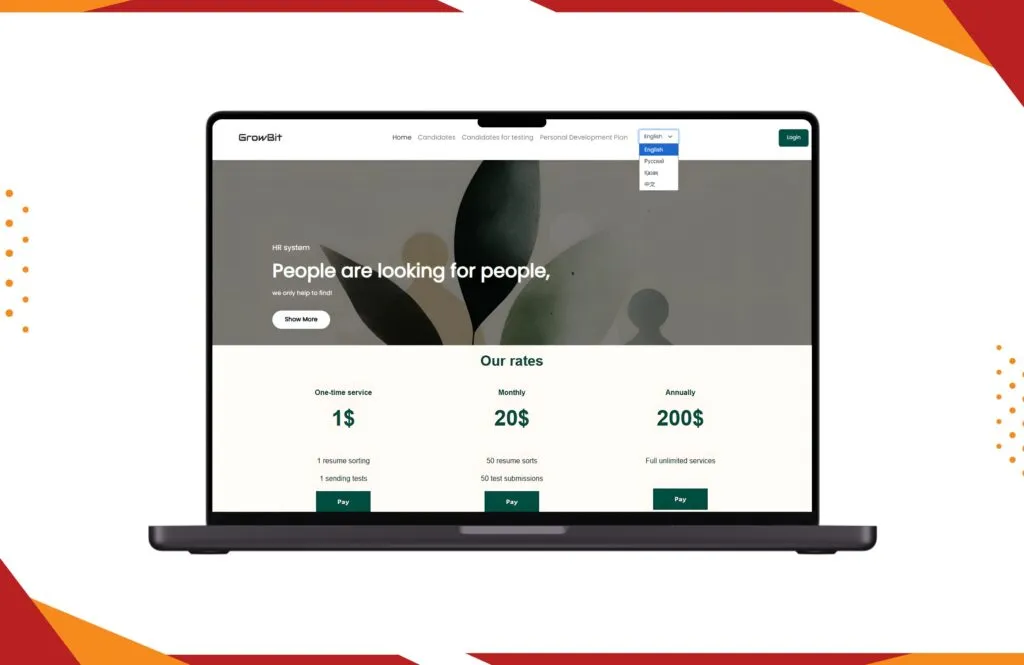
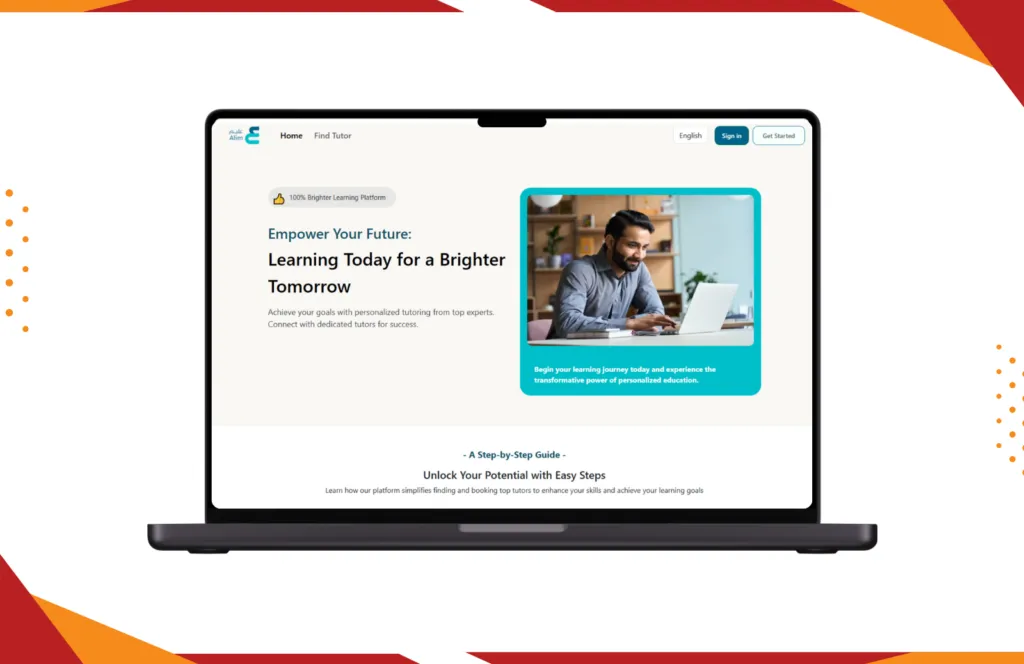
The applications are practical: HR workflows that classify or summarise (the public Growbit case describes AI-assisted hiring and reporting), tutoring products that need structured content and matching (Al Alim’s public AI/EdTech tags), OCR and document intelligence for operations, and internal copilots over policies or tickets. Evaluation is part of the craft — golden questions, regression when a prompt changes, and a human review path when the task is high impact. Microsoft-centric teams may use Copilot Studio or related foundry tooling; that is still integration work, not a substitute for product engineering.
The work outgrows a single AI specialist when the feature must live in a real interface, persist in a real database, pass ordinary QA, and be designed so people understand when the model is guessing. An AI developer can prototype a chain. They should not also be the only designer, the only API owner, and the only person testing the booking or payroll screens around it.
AI capabilities
LLM application integration
Server-side model calls, streaming, and failure handling.
RAG
Ingestion, chunking, retrieval, and citations that can be inspected.
Agents & tool calling
Bounded tools, approvals, and traces — not unbounded autonomy theatre.
AI automation
Operational workflows that replace swivel-chair steps.
OCR & documents
Extraction into structured records the rest of the stack can use.
Evaluation
Repeatable checks when prompts, models, or corpora change.
Copilot Studio / App Foundry
Microsoft-oriented automation when that is the customer’s estate.
Product embedding
AI features inside Next.js, Laravel, or existing APIs — not a sidecar demo.
What projects use AI?
HR operations SaaS
AI-assisted hiring and reporting — Growbit’s public description.
Learning products
AI-tagged tutoring platform work — Al Alim.
Document pipelines
OCR into the system of record, with review queues.
Internal copilots
Policy and ticket assistance with logging and permissions.
When an AI specialist is enough — and when the application stack matters more
A capable AI developer is excellent at model integration, retrieval, and automation design. For a contained experiment — a classified inbox, a summariser behind a feature flag — one specialist can be the right start.
What typically sits outside that discipline is the host product: schema design, auth, frontend states, visual design, and classical QA. Model quality will not save a confusing workflow or an API that cannot store the result.
Apps Island’s team exists so AI work ships next to backend, frontend/mobile, UI/UX + QA, and a technical lead. You are not asked to hire a separate “AI vendor” and then glue it to everyone else.
What you actually get
The Apps Island 5-resource technology team
One service. Allocation follows the project. This is not five identical full-time developer seats unless a contract says otherwise.
Full-Stack
Full-Stack / Backend Developer
Owns APIs, databases, and backend architecture so the product has a durable core.
Frontend / Mobile
Frontend / Mobile Developer
Builds the customer-facing web and mobile interfaces people actually use.
AI & Automation
AI / Automation Developer
Adds agents, LLM features, OCR, and automation into real product workflows.
UI/UX + QA
UI/UX + QA Specialist
Shapes usable interfaces and tests the product before it reaches your users.
Tech Lead /
Technical Lead / Project Manager
Sets architecture, plans delivery, and keeps the engagement moving as one team.
What you actually get
AI / automation
LLM features, agents, RAG, and operational automation.
Full-stack / backend
The records, permissions, and jobs the model must not invent.
Frontend / mobile
Streaming UI, citations, and honest empty states.
UI/UX + QA
Journeys and eval-aware testing.
Technical lead / PM
Scope, risk, and what must stay human.
Relevant work
Selected public project information
Descriptions are based on publicly published portfolio pages. Testimonials from that source are not reused. Unpublished metrics are omitted.
Building something similar?
Talk to the Apps Island team about your project.
Is the team right for you?
An honest qualification
Good fit
- AI features inside an existing SaaS or ops product
- RAG over policies, tickets, or catalogues
- Automation that still needs a proper application
- Document intelligence with a review queue
May not be the best fit
- A request to scrape copyrighted books into a model
- A weekend chatbot with no product, data, or owner
Already have developers?
Apps Island can complement an existing engineering organisation.
Your team
+
Apps Island
=
Additional capacity
Are you a digital agency?
Keep the client relationship while Apps Island provides technology delivery capacity.
Your agency
+
Apps Island
=
More delivery capacity
Pricing
Approximately $100,000 / year
The same commercial band as hiring one developer — for a complete 4–5 person technology function.
One developer
~$100,000 / year
One skill set. You still recruit the rest.
Apps Island team
~$100,000 / year
Backend, frontend/mobile, AI, UI/UX + QA, technical lead.
Introductory offer
30% off your first month
Try the team. Experience the delivery. Then decide whether we are the right long-term partner. The discount applies to month one only — not a 6- or 12-month price cut, and not a $70,000 year.
30%OffTeamCoupon
Standard monthly benchmark
~$8,333
First month
~$5,833
Then 6-month or 12-month continuation if the fit is right.
What happens after month one
Use the first month to decide if Apps Island is the right long-term technology partner.
Month 1
30% off
Work starts. You see communication, quality, and technical fit.
Evaluate
Delivery, not a pitch
Communication. Quality. Delivery. Technical fit. No fake countdown.
Continue
6 or 12 months
If the partnership works, continue. You are not forced into a year on day one.
Work with confidence
Payment and engagement options
Upwork
Apps Island can work through Upwork where appropriate. Platform terms — including milestone funding and review windows — apply.
Independent escrow
For suitable direct engagements, an independent escrow arrangement may be agreed between the parties. Apps Island does not operate escrow.
Questions people actually ask
Will you train a custom foundation model?
Usually no. Most product work uses existing model APIs plus your data. Custom training is a different class of project and we will say so.
Can AI work with our existing developers?
Yes. The typical pattern is embedding AI into a codebase you already run.
How do we know the answers are right?
Evaluation sets, citations where retrieval is used, and human review for high-impact actions. We do not claim perfection.
Is Copilot Studio required?
Only if your Microsoft estate makes it the sensible tool. It is not a default for every AI engagement.
Can I try the team for one month?
Yes. 30% off month one, then decide on 6- or 12-month continuation.
FAQ
Do you sell ChatGPT wrappers as a product?
No. We sell a technology team that can put model APIs into real applications with boundaries and evaluation.
What is RAG in practical terms?
Retrieve relevant passages from your corpus, then generate with that context. It is data engineering plus prompting, not a magic toggle.
Can an agent take actions in our systems?
Only through tools you approve, with logging. Unbounded agents are a demo, not a design.
Which language do you use for AI work?
Python is common for pipelines; application code may be TypeScript or PHP depending on the host product.
Will you publish accuracy percentages for my use case?
Not unless we measure them on your data. We will not invent a 99% claim.
Are Growbit’s overhead figures my figures?
No. Those numbers belong to a public case-study headline. Your results depend on your processes.
Can agencies use the AI seat as extra capacity?
Yes. Keep the client relationship; we supply delivery including AI when the brief needs it.
Tell us what you need
A short briefing before we talk
Step 1 of 6: What are you looking to do?
Continue in this cluster
Technical perspective from the Apps Island delivery team. Named authorship can be added when a reviewer is assigned. No invented expert profiles.