React development
Hire React Developers for Your Next Product
Build production-ready web applications with React expertise — components, state, and UI — backed by backend, AI, QA, UI/UX and technical leadership when the work is more than frontend.
30% off first month
Hire React Developers for Your Next Product. Hooks, composition, and honest loading states against a real API.
Component
Components
Why this page exists
What a React hire is being asked to own
“Hire React developer” usually means product UI: screens, interaction, and client-side state. Searchers often already have — or expect — an API. The gap is coordinating that UI with the rest of delivery.
React is a component model for user interfaces: composition, hooks, and a rendering cycle you can reason about. It is a strong fit for booking flows, dashboards, and design-system-driven products. It is a weak fit as a substitute for backend design, QA strategy, or product leadership.
Apps Island uses React as an entry point into a complete technology team. You may arrive looking for one frontend specialist. The offer is still the 5-resource function at approximately $100,000/year.
What Does a React Developer Typically Do?
A React developer typically turns product intent into a component tree. That includes breaking screens into reusable pieces, choosing where state lives — local hooks, context, or a dedicated store — and wiring forms, tables, and overlays to API responses. They care about render cost: memoisation used sparingly, list virtualisation when lists get long, and avoiding waterfalls of client fetches. Accessibility is part of the job: labels, focus traps in dialogs, and keyboard paths that match what the mouse can do. TypeScript, when used, is there to make the props and API shapes explicit rather than decorative.
Typical applications are SPAs and hybrid apps: travel booking funnels, operator consoles, investor dashboards, and marketing sites that grow into logged-in products. They integrate REST or GraphQL, handle optimistic updates carefully, and fight the classic bugs — stale closures, mismatched keys, and CSS that only works on the designer’s laptop. Testing often means React Testing Library for behaviour, plus visual review of responsive breakpoints. Design-system work — buttons, inputs, density — is how teams stop reinventing the same control.
The role usually needs help when the interface is blocked by an unfinished API, when visual design is still undecided, when native mobile is in scope, or when AI features need streaming and evaluation rather than a fetch-on-submit box. A React specialist can mock the contract; they should not be the only person inventing the domain model, the test strategy, and the release plan.
React capabilities
Component architecture
Composition, props contracts, and folders that still make sense at screen 40.
State management
Local state, caches, and stores chosen for the problem — not by fashion.
API integration
Loading, error, retry, and mutation UX that matches backend reality.
Performance
Bundle awareness, lists, and render discipline.
Design systems
Tokens, density, and reusable controls instead of one-off CSS.
Testing
Behaviour tests and regression habits, not only happy-path demos.
React + Next.js
When the product needs routing, metadata, and server rendering, the team already has that path.
Dashboard & booking UI
Operational screens and multi-step flows like travel or investment consoles.
What projects use React?
Travel booking
Search, package presentation, and support — the public shape of Ban Travel.
Investment portals
React on a Laravel core, as published for DreamCity.
Internal consoles
Dense tables, filters, and permission-aware actions.
Design-system products
Shared components across marketing and authenticated app.
When a React specialist is the right hire — and when it is not
A capable React developer is excellent at interaction and structure on the client. For a contained UI — a new settings screen, a well-specified dashboard against a stable API — one frontend specialist can be enough.
What usually sits outside that discipline is the system of record, authentication, background jobs, visual identity, exploratory QA, and native mobile. React will faithfully display a bad contract. It will not invent a safe payment flow or a store-ready iOS build by itself.
Apps Island places React inside a 5-resource team so the interface is built next to backend, AI, UI/UX + QA, and a technical lead. You are not left to recruit those roles as four extra contractors.
What you actually get
The Apps Island 5-resource technology team
One service. Allocation follows the project. This is not five identical full-time developer seats unless a contract says otherwise.
Full-Stack
Full-Stack / Backend Developer
Owns APIs, databases, and backend architecture so the product has a durable core.
Frontend / Mobile
Frontend / Mobile Developer
Builds the customer-facing web and mobile interfaces people actually use.
AI & Automation
AI / Automation Developer
Adds agents, LLM features, OCR, and automation into real product workflows.
UI/UX + QA
UI/UX + QA Specialist
Shapes usable interfaces and tests the product before it reaches your users.
Tech Lead /
Technical Lead / Project Manager
Sets architecture, plans delivery, and keeps the engagement moving as one team.
What you actually get
Frontend / mobile
React (and mobile where the product needs it) as a first-class discipline.
Full-stack / backend
APIs and data so the UI is not theatre.
AI / automation
Model-backed surfaces with honest loading and failure states.
UI/UX + QA
Design quality and checks that survive real browsers.
Technical lead / PM
Priorities, sequencing, and one conversation.
Relevant work
Selected public project information
Descriptions are based on publicly published portfolio pages. Testimonials from that source are not reused. Unpublished metrics are omitted.
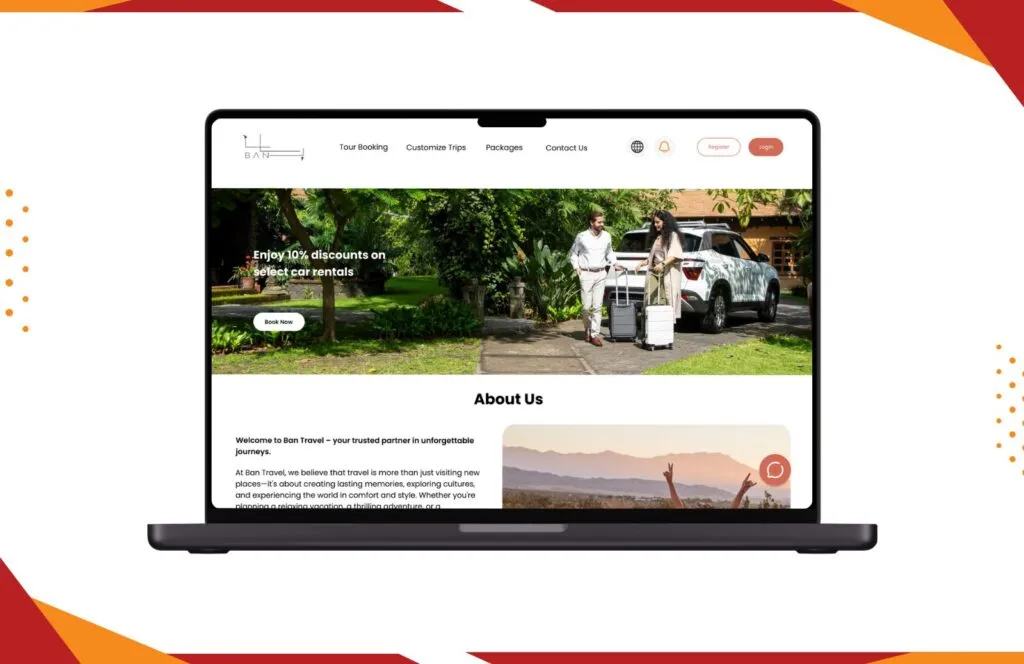
Website & Software
Ban Travel
A travel booking website for reservation flows, package presentation, and support touchpoints on every device.
View case study
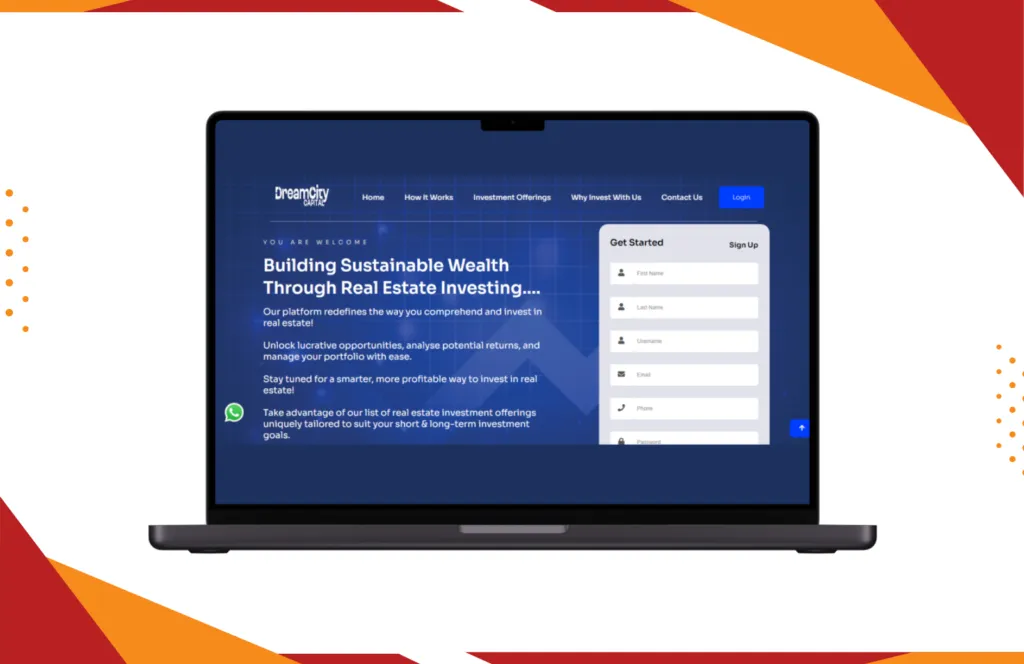
Website & Software
DreamCity
A digital real-estate investment platform for browsing pre-vetted offerings, deposits, and stake tracking.
View case study
Building something similar?
Talk to the Apps Island team about your project.
Is the team right for you?
An honest qualification
Good fit
- Product UI with a growing screen count
- Booking, dashboard, or operator workflows
- Existing API that needs a serious client
- Design-system work across web surfaces
May not be the best fit
- A single banner image swap
- A throwaway CodePen with no product around it
Already have developers?
Apps Island can complement an existing engineering organisation.
Your team
+
Apps Island
=
Additional capacity
Are you a digital agency?
Keep the client relationship while Apps Island provides technology delivery capacity.
Your agency
+
Apps Island
=
More delivery capacity
Pricing
Approximately $100,000 / year
The same commercial band as hiring one developer — for a complete 4–5 person technology function.
One developer
~$100,000 / year
One skill set. You still recruit the rest.
Apps Island team
~$100,000 / year
Backend, frontend/mobile, AI, UI/UX + QA, technical lead.
Introductory offer
30% off your first month
Try the team. Experience the delivery. Then decide whether we are the right long-term partner. The discount applies to month one only — not a 6- or 12-month price cut, and not a $70,000 year.
30%OffTeamCoupon
Standard monthly benchmark
~$8,333
First month
~$5,833
Then 6-month or 12-month continuation if the fit is right.
What happens after month one
Use the first month to decide if Apps Island is the right long-term technology partner.
Month 1
30% off
Work starts. You see communication, quality, and technical fit.
Evaluate
Delivery, not a pitch
Communication. Quality. Delivery. Technical fit. No fake countdown.
Continue
6 or 12 months
If the partnership works, continue. You are not forced into a year on day one.
Work with confidence
Payment and engagement options
Upwork
Apps Island can work through Upwork where appropriate. Platform terms — including milestone funding and review windows — apply.
Independent escrow
For suitable direct engagements, an independent escrow arrangement may be agreed between the parties. Apps Island does not operate escrow.
Questions people actually ask
Can you work in our existing React repo?
Yes. Complementing an in-house frontend group is a normal engagement pattern.
Do we have to rewrite in Next.js?
No. Next.js is used when the product needs it. A SPA can stay a SPA if that is the right architecture.
Who owns CSS and design tokens?
UI/UX and frontend work together so tokens are not invented twice.
How do we communicate day to day?
Through the technical lead, in the channels you already use — not five parallel Slack silos.
Can I start with the first month?
Yes. Month one is discounted 30% so you can judge communication, quality, and fit before a 6- or 12-month continuation.
FAQ
Are you hiring out a single React contractor?
The commercial product is a multidisciplinary team. React is how many buyers find us, not a standalone SKU.
Do you use class components?
Modern React delivery is hooks-based unless a legacy codebase requires otherwise. We do not rewrite working code for ideology.
How do you handle global state?
We pick the smallest tool that matches the problem. Not every screen needs a global store.
Can React cover iOS and Android by itself?
No. React Native or Flutter is a different delivery stream. The team includes mobile capacity when the product needs native clients.
What happens after the introductory month?
You evaluate fit. If it works, continue under a 6-month or 12-month engagement. The 30% does not extend automatically.
Will you reuse Ban Travel testimonials?
No. We show public project information only — not testimonials from other companies’ sites.
Can an agency keep the client relationship?
Yes. Apps Island can supply delivery capacity while you keep the account.
Tell us what you need
A short briefing before we talk
Step 1 of 6: What are you looking to do?
Continue in this cluster
Technical perspective from the Apps Island delivery team. Named authorship can be added when a reviewer is assigned. No invented expert profiles.