Laravel development
Hire Laravel Developers for Your Next Project
Build secure, scalable Laravel applications with experienced backend development — and access to frontend, AI, QA, UI/UX and technical leadership through one coordinated team when the product is bigger than PHP.
30% off first month
Hire Laravel Developers for Your Next Project. Eloquent, APIs, queues, and auth — then the rest of delivery.
Why this page exists
What hiring Laravel capacity actually means
People searching “hire Laravel developer” usually need PHP application capacity: a maintainable Laravel codebase, APIs, and database work. They are not always asking for five extra people. They are asking for the backend to stop being the bottleneck.
Laravel is a structured way to build PHP products: routing, Eloquent, migrations, queues, events, notifications, and first-party auth packages. That structure is why so many SaaS and internal tools start here. It is also why hiring only for Laravel can hide the rest of the delivery problem.
Apps Island’s commercial offer is not a Laravel freelance seat. It is a 4–5 person technology function in which Laravel/PHP is one discipline among backend, interface, AI, quality, and leadership — for approximately $100,000/year.
What Does a Laravel Developer Typically Do?
A Laravel developer typically owns the PHP application core. That means HTTP routing and middleware, form and API validation, Eloquent models and relationships, database migrations, and the policy layer that decides who may touch which records. They design how domain rules live in actions or services rather than in controllers, and they choose authentication patterns — session, Sanctum tokens, or Passport — based on whether the clients are Blade, SPA, or mobile. Queues and jobs are part of the same job: emails, imports, webhooks, and report generation should not block a request thread.
The projects that use this skill set are rarely “a brochure site.” They are multi-tenant SaaS backends, operational admin tools, REST or JSON APIs for a separate frontend, marketplace catalogues, quiz or content engines, and payment-adjacent flows that must be auditable. Day-to-day work includes killing N+1 queries, adding indexes, deciding what belongs in Redis versus the database, writing feature tests around tenancy, and deploying PHP-FPM or Octane behind a load balancer. Integrations — Stripe-like billing providers, CRMs, storage, and inbound webhooks — usually land on the same person because they already own the domain model.
The work usually outgrows a single Laravel specialist when the product needs a serious product UI, a mobile client, visual design, exploratory QA, or model-backed features. Laravel can expose the API and persist the records. It does not, by itself, produce an accessible design system, a store-ready mobile app, an evaluation harness for LLM calls, or a release train that coordinates those streams. That is the point at which adjacent disciplines stop being optional.
Laravel capabilities
Laravel & PHP architecture
Domain services, tenancy, policies, and code that other engineers can extend.
Eloquent & data modelling
Relationships, migrations, query performance, and reporting-friendly schemas.
Queues, jobs, and events
Async work, retries, notifications, and webhook processing.
APIs for other clients
Sanctum/Passport, versioning, and contracts a Next.js or mobile app can trust.
SaaS foundations
Billing-ready structure, admin tools, and feature delivery — not a one-off script.
Laravel + Next.js
PHP as the system of record with a modern frontend when the product needs it.
Laravel + AI
Model calls, document pipelines, and automation sitting on stable APIs.
Cloud & modernization
Deployment, Laravel upgrades, and older PHP systems moved onto a maintainable core.
What projects use Laravel?
Multi-brand commerce
Catalogues, carts, and vendor-style admin — the shape of marketplace work such as Shutre.
Assessment SaaS
Question banks, timing, grading, and teacher/student roles — the shape of Fressnel.
Investment operations
Offerings, deposits, and stake tracking on a Laravel core — the shape of DreamCity.
Internal tools
Ops consoles, imports, and permissioned workflows that must not live in spreadsheets.
When Laravel is enough — and when the product needs more than PHP
A strong Laravel developer is excellent at the PHP domain: persistence, authorization, jobs, and the API that other systems call. For a narrowly scoped backend — a well-defined API, a migration, a queue worker — one specialist can be the right hire. That honesty matters. Not every ticket needs five people.
What typically sits outside that primary discipline is the product surface: component architecture, responsive UI, motion and empty states, visual QA, mobile store submission, and model-backed features that need evaluation rather than a prompt stuffed into a job class. Customers experience those gaps as “the API works but the product does not.”
Apps Island’s multidisciplinary team is built for the broader case. Laravel/PHP capacity sits with frontend/mobile, AI/automation, UI/UX + QA, and a technical lead so you are not recruiting and coordinating those roles separately. Allocation follows the project — this is a 4–5 person function, not a promise of five identical full-time Laravel seats.
What you actually get
The Apps Island 5-resource technology team
One service. Allocation follows the project. This is not five identical full-time developer seats unless a contract says otherwise.
Full-Stack
Full-Stack / Backend Developer
Owns APIs, databases, and backend architecture so the product has a durable core.
Frontend / Mobile
Frontend / Mobile Developer
Builds the customer-facing web and mobile interfaces people actually use.
AI & Automation
AI / Automation Developer
Adds agents, LLM features, OCR, and automation into real product workflows.
UI/UX + QA
UI/UX + QA Specialist
Shapes usable interfaces and tests the product before it reaches your users.
Tech Lead /
Technical Lead / Project Manager
Sets architecture, plans delivery, and keeps the engagement moving as one team.
What you actually get
Full-stack / backend
Laravel, PHP, APIs, and the database as the system of record.
Frontend / mobile
The interfaces that call those APIs, including React/Next.js when the product needs it.
AI / automation
Model-backed features and operational automation on top of stable Laravel endpoints.
UI/UX + QA
Journey quality, regression checks, and the unglamorous empty states.
Technical lead / PM
Sequencing, communication, and a single backlog instead of five vendors.
Relevant work
Selected public project information
Descriptions are based on publicly published portfolio pages. Testimonials from that source are not reused. Unpublished metrics are omitted.

Website & Software
Shutre
A Laravel multi-brand online shopping mall with shared catalogue, cart, and checkout.
View case study
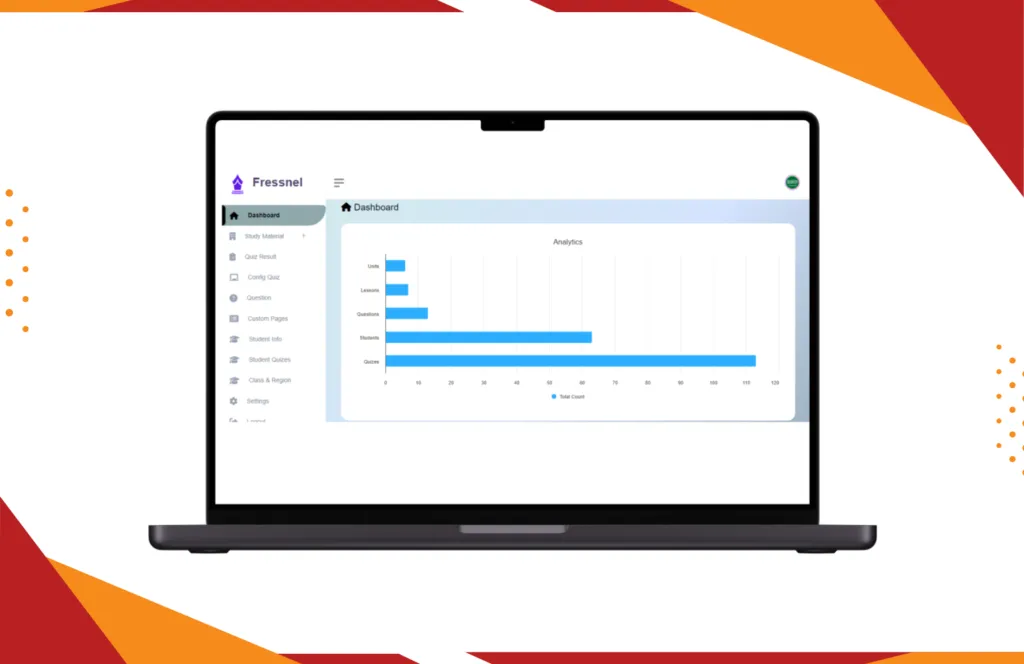
Website & Software
Fressnel
A Laravel quiz-management SaaS for question banks, timed exams, auto-grading, and results analytics.
View case study
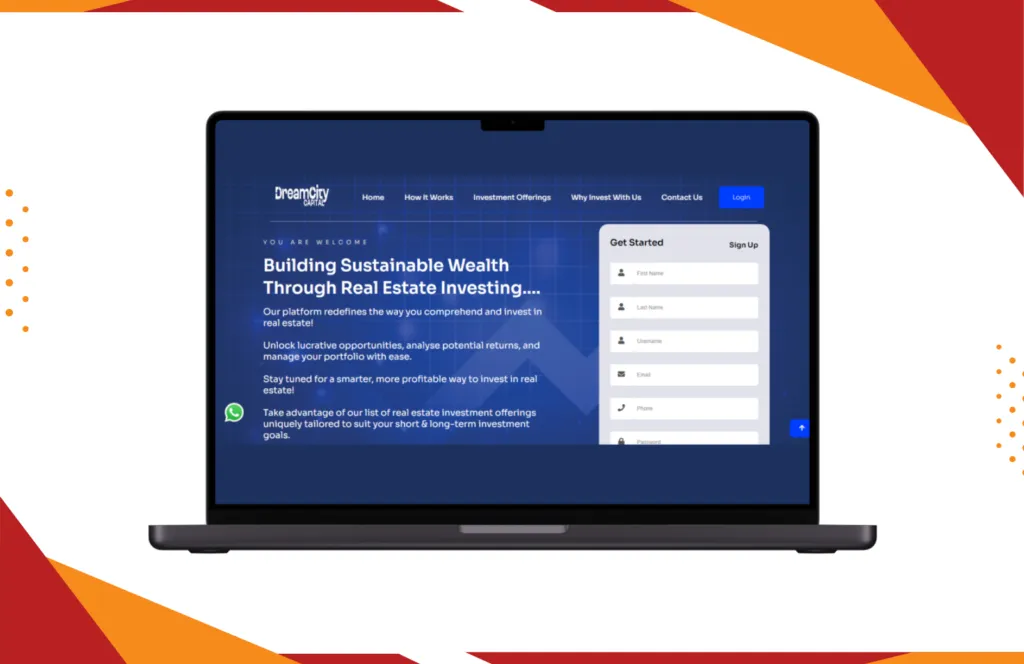
Website & Software
DreamCity
A digital real-estate investment platform for browsing pre-vetted offerings, deposits, and stake tracking.
View case study
Building something similar?
Talk to the Apps Island team about your project.
Is the team right for you?
An honest qualification
Good fit
- SaaS or admin product with a Laravel core
- Marketplace or multi-tenant PHP application
- Existing Laravel app that also needs UI, QA, or AI
- Agency delivery that needs backend capacity without giving up the client
May not be the best fit
- A one-line Blade copy change
- A weekend plugin tweak with no surrounding product work
Already have developers?
Apps Island can complement an existing engineering organisation.
Your team
+
Apps Island
=
Additional capacity
Are you a digital agency?
Keep the client relationship while Apps Island provides technology delivery capacity.
Your agency
+
Apps Island
=
More delivery capacity
Pricing
Approximately $100,000 / year
The same commercial band as hiring one developer — for a complete 4–5 person technology function.
One developer
~$100,000 / year
One skill set. You still recruit the rest.
Apps Island team
~$100,000 / year
Backend, frontend/mobile, AI, UI/UX + QA, technical lead.
Introductory offer
30% off your first month
Try the team. Experience the delivery. Then decide whether we are the right long-term partner. The discount applies to month one only — not a 6- or 12-month price cut, and not a $70,000 year.
30%OffTeamCoupon
Standard monthly benchmark
~$8,333
First month
~$5,833
Then 6-month or 12-month continuation if the fit is right.
What happens after month one
Use the first month to decide if Apps Island is the right long-term technology partner.
Month 1
30% off
Work starts. You see communication, quality, and technical fit.
Evaluate
Delivery, not a pitch
Communication. Quality. Delivery. Technical fit. No fake countdown.
Continue
6 or 12 months
If the partnership works, continue. You are not forced into a year on day one.
Work with confidence
Payment and engagement options
Upwork
Apps Island can work through Upwork where appropriate. Platform terms — including milestone funding and review windows — apply.
Independent escrow
For suitable direct engagements, an independent escrow arrangement may be agreed between the parties. Apps Island does not operate escrow.
Questions people actually ask
Do I really need five resources for a Laravel app?
Not if the work is a narrow PHP change. You need a wider function when the Laravel backend is one part of a product that also has UI, quality, integrations, or AI.
Can the team work with my existing PHP developers?
Yes. Apps Island can complement an in-house Laravel or PHP group rather than replace it.
Who manages the team?
A technical lead / project manager is part of the 5-resource model so you are not personally dispatching every discipline.
Do I have to sign 12 months immediately?
No. Month one is the discounted trial of the team. Continuation as a 6-month or 12-month engagement is a later decision if the fit is right.
Can we use Upwork or escrow?
Apps Island can work through Upwork where appropriate. For suitable direct work, an independent escrow arrangement may be agreed. Apps Island does not operate escrow.
FAQ
Is Apps Island selling a dedicated Laravel freelancer?
No. Laravel is an entry point. The product is a managed 4–5 person technology team for approximately the cost of one developer.
Can you keep an existing Laravel codebase?
Yes. Much of the value is extending, testing, and surrounding an application you already have — not rewriting it for sport.
Do you only write Blade, or also APIs for SPAs?
Both patterns exist in real Laravel work. APIs for React, Next.js, or mobile clients are a normal part of the discipline.
How do queues and Horizon fit into delivery?
Jobs, retries, and monitoring are treated as product infrastructure, not as an afterthought once the UI is “done.”
What does 30% off actually apply to?
The first month only — approximately $5,833 instead of approximately $8,333 — when coupon 30%OffTeamCoupon is applied. It is not a discount on a $100,000 year.
Will you invent marketplace metrics for my Laravel store?
No. We discuss scope honestly. Public project pages are labelled as available information, not as your future KPIs.
Is Eloquent a substitute for a data warehouse?
No. Eloquent is the application ORM. Analytics and warehousing are adjacent problems the team can plan for rather than pretend live in a model file.
Tell us what you need
A short briefing before we talk
Step 1 of 6: What are you looking to do?
Continue in this cluster
Technical perspective from the Apps Island delivery team. Named authorship can be added when a reviewer is assigned. No invented expert profiles.